A self-described empath says she is helping heal Montreal's nightlife by turning casual intimacy into a form of emotional care. Twenty-year-old Cassandra "Aura" Leblanc claims she can recognize when someone feels alone, even inside a crowded party. She usually notices the person laughing too loudly, standing quietly near the speakers or spending the entire night making sure everybody else is having fun.
"People think empathy means absorbing someone's sadness and then going home exhausted," Aura explained. "I would rather help them leave with less sadness than they arrived with." Sometimes that means listening, dancing or sitting together until sunrise. Sometimes the connection becomes physical, which Aura openly enjoys and sees as a shared experience rather than a favour she is performing. "Their energy chooses me," she said. "I simply try to be available when it does."
Friends say Aura has connected with DJs, promoters, bartenders, ravers, coat-check workers and one exhausted sound technician whom everyone else ignored. "Most people only speak to me when a monitor stops working," he said. "Aura listened to me explain feedback frequencies for forty minutes and remembered my name the following weekend. I felt desirable for the first time since 2019."
Aura compares her philosophy to the free-love movement of the 1960s. She believes affection does not become less meaningful simply because it is shared with more than one person. She calls herself a "community love distributor," while her friends describe her as Montreal's most personal outreach program. Unlike most wellness services, hers operates after 3 a.m. and occasionally stays for breakfast.
A local wellness practitioner noted that empathy is usually expressed through listening, patience and emotional support. Aura said she offers all three, but believes different people need different kinds of closeness at different moments. "I am not walking into a party with a list," she said. "I pay attention. Sometimes someone needs advice, sometimes they need space and sometimes they need to feel wanted." She does not expect everyone to understand her approach, but believes happiness is not a limited resource.
Aura plans to continue spreading positivity throughout Montreal's many party scenes. "The old hippies gave people flowers," she said, packing incense, massage oil and three phone chargers into an overnight bag. "I give people memorable evenings and a reason to drink electrolytes the next morning. Love is the most powerful force in the universe, and I intend to share it with anyone who needs some."
A 43 year old Montreal raver says he only dates teenage girls because women his own age are too demanding and unwilling to tolerate his lifestyle. "Older women expect you to have a job, furniture and a bedroom that doesn't smell like bong water," says Martin Beaulieu. "Young girls are more open minded. They care about music, having fun and whether I can convince a promoter to let them into a rave."
Martin prefers girls as close as possible to Canada's age of consent, which he repeatedly cites as proof that his relationships are completely normal. "The government picked 16 for a reason," says Martin. "Some of my friends think I should date women in their twenties, but that's disgusting. A 25 year old woman is practically middle aged. She probably has a credit card and strong opinions about men who sleep until four in the afternoon."
Friends say Martin usually dumps his girlfriends once they become old enough to realize that dating him was a terrible mistake. "The trouble starts around 19," says longtime friend Simon Leduc. "They start going to university, meeting normal men and asking Martin why he owns three turntables but no bed frame. That's when he accuses them of changing and starts looking for someone younger."
When Martin becomes bored with his current girlfriend, he spends afternoons hanging around Villa-Maria and trying to meet teenage girls. He insists that standing near a school in a faded rave hoodie and asking young women whether they like happy hardcore is not suspicious. "I'm just meeting people who share my interests," says Martin. "Some men go to bars. I go where the women I'm interested in spend their lunch breaks."
Martin prefers raves to nightclubs because clubs usually require guests to be at least 18 years old. "Clubs are full of old women," he says. "At a rave, nobody cares about age. Promoters just want your money, security can't read most of the IDs and half the people inside look like they escaped from a daycare. It's a much more accepting environment for a mature man with extremely specific romantic preferences."
Martin's current girlfriend will turn 18 next month, forcing him to make a difficult decision about their future. "She's already talking about getting a summer job and applying to university," says Martin. "I can feel her slipping away." Friends believe the relationship might survive another year, but Martin is not optimistic. "I'll always care about her," he says. "I just don't know if I can watch someone I love become elderly."
A Montreal raver has avoided paying for drugs for nearly three years by using magic tricks, pickpocketing skills and the generosity of intoxicated strangers. Twenty-nine-year-old Tristan "The Amazing Trizzini" Gagnon attends parties carrying nothing but an empty fanny pack and leaves with what friends describe as a complete pharmaceutical collection. "Other people spend hundreds of dollars partying," says Tristan. "I spend seven dollars on bus fare and let my hands do the shopping."
Tristan's routine begins when he asks someone for a small amount of whatever they are carrying. Witnesses say borrowed containers frequently return lighter, nearly empty or mysteriously different from when they left their owners' hands. "He borrowed my bag for five seconds, waved his fingers over it and gave it back," says raver Amanda Choquette. "Thirty minutes later, I realized everything inside had been replaced with a useless household powder. He didn't even yell 'abracadabra.' That felt unprofessional."
Other victims say personal dispensers, containers and entire collections have vanished after Tristan offered to perform what he calls "close-up rave magic." A former children's birthday magician, Tristan distracts partygoers with card tricks, disappearing coins, plastic wands and brightly coloured handkerchiefs. Nobody remembers seeing him take anything. They only remember him asking confusing questions, bumping into them and complimenting their outfits moments before their possessions disappeared. "He showed me a coin, asked which hand it was in and then both my pockets were empty," says 25-year-old techno enthusiast Simon Roy. "The coin was gone too. Honestly, the trick had too many endings."
Tristan denies being a thief and describes himself as an alternative-economy illusionist. "The drugs don't belong to anyone once the music starts," he says. "They enter a shared spiritual marketplace where ownership is determined by dexterity." He claims his fanny pack is merely a theatrical prop, despite witnesses seeing him empty it after one party and produce fourteen unidentified packets, six dispensers, three wallets, a cigarette case, someone's apartment keys and a small rubber duck he insists belongs to another magician.
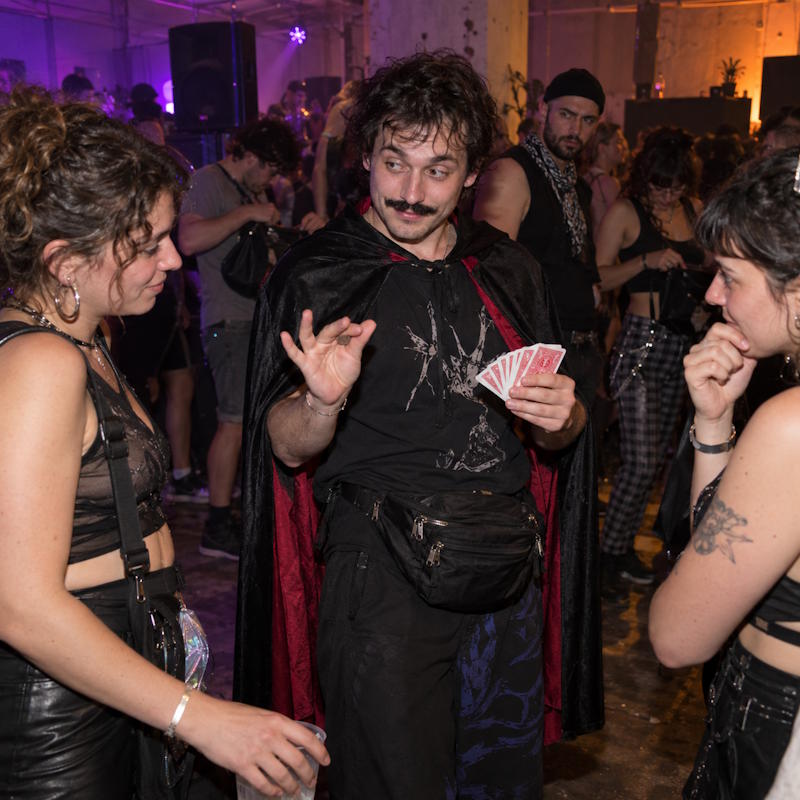
Promoters have repeatedly tried to ban Tristan, but he keeps returning in different costumes and under new stage names, including Professor Ketamino, The Great Bumpini and DJ David Coppersniff. "We threw him out on Friday and he came back Saturday wearing a cape and fake moustache," says promoter Patrick Lemieux. "The disguise was terrible, but he performed a card trick for the door person and somehow ended up on the guest list." Harm-reduction workers warn that tampered or substituted substances can cause poisoning and recommend protecting personal belongings, avoiding unidentified substances and notifying event staff about suspected theft.
Tristan remains active in Montreal's party scene and is believed to be performing at warehouses, clubs and afterparties across the city. Every few weeks, another promoter announces that he has been permanently banned, only for him to reappear somewhere else with a new costume and an empty fanny pack. "People keep saying they're going to make me disappear," says Tristan. "Unfortunately for them, I'm the magician."
A former raver has become the most requested woman on the luxury-dating platform Velvet Terms after discovering that years spent navigating afterparties had prepared her perfectly for wealthy men seeking attractive companionship. Twenty-six-year-old Anaïs Desrosiers says her inbox now receives more invitations in one afternoon than most people receive during an entire summer.
Desrosiers spent much of her early twenties in Montreal’s rave scene, where she developed an unusual talent for recognizing who actually had money, who was pretending to have money and who had already borrowed twenty dollars from everyone near the DJ booth. She also became skilled at listening to long personal stories, escaping uncomfortable conversations and remaining polite while somebody explained an investment opportunity nobody had requested.
She joined Velvet Terms after a friend pointed out that she was already spending her weekends entertaining older men at parties without receiving anything beyond warm beer and questionable advice. Desrosiers created a simple profile explaining that she enjoyed good restaurants, honest conversations and people who respected her time. Within two days, she had received hundreds of messages from businessmen, property developers and one man whose profile described him only as “financially discreet.”
Her popularity comes partly from refusing to behave like someone she is not. She does not pretend to understand expensive wine, laugh at every joke or act impressed when a man mentions owning several condominiums. Instead, she asks direct questions, remembers small details and makes her dates feel interesting without treating them like celebrities. “Most of these men have people who want their money,” she explained. “Very few have someone willing to tell them their new haircut was a serious mistake.”
Some former rave friends have criticized the arrangements for being transactional. Desrosiers finds this argument strange coming from people who regularly promote events in exchange for guest-list access. “Almost every relationship involves people wanting something from each other,” she said. “At least Velvet Terms encourages everyone to be honest about what that is.”
Desrosiers now considers each invitation carefully, preferring men who make clear plans and respect her time. She still attends the occasional rave, but says she no longer feels obligated to impress people offering nothing in return. “The rave scene taught me that everybody wants something,” she said. “Velvet Terms taught me to ask what they are bringing to the arrangement.”
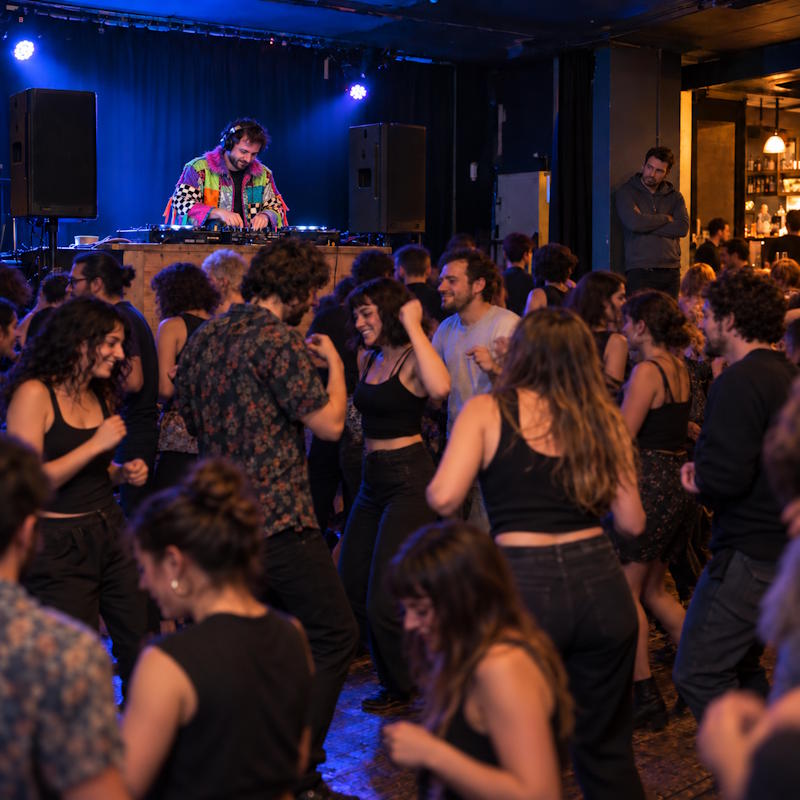
Montreal promoters continue to book popular local DJ Max “Genrefluid” Beaumont despite admitting there is only a fifty percent chance he will play the style of music requested. “You can book him for a techno party and get techno, or you can spend the night explaining to angry people why he’s playing happy hardcore,” says promoter Simon Deslauriers. “It’s basically a coin toss, except the coin has a SoundCloud account and arrives forty minutes late.”
Max insists promoters should treat musical genres as suggestions rather than legally binding obligations. “If someone asks me to play house, that tells me they’re emotionally prepared to hear music through speakers,” he says. “What kind of music comes out of those speakers depends on the room, the energy and whatever playlist I opened before leaving my apartment. Sometimes house energy requires drum and bass. Sometimes a psytrance crowd needs two hours of reggaeton. A real DJ gives people what they didn’t know they were trying to avoid.”
Several promoters have stopped putting genres on Max’s flyers because doing so creates unrealistic expectations. Last month, he was booked to close a dark industrial techno event but arrived carrying a USB containing ninety-three disco edits and one Eminem song. “I asked him where the techno was and he told me darkness comes in many forms,” says organizer Patrick Lemieux. “Then he played ABBA while a man in a gas mask stared at me like I had personally betrayed the underground.”
Despite these incidents, Max remains one of the city’s most frequently booked DJs because he brings dozens of friends, former roommates, casual acquaintances and women who believe they are on the guest list. “His music might empty half the dance floor, but his personality fills the entire venue,” says club owner Mélanie Fortin. “When Max is on the flyer, two hundred people show up before midnight. They spend money, take pictures and repeatedly ask when Max is playing. Once he starts playing, many of them leave, but by then we already have their coat-check money.”
Max’s supporters say musical consistency is less important than his ability to transform every booking into a social event centered around himself. “I don’t know what he plays,” says longtime friend Kevin Drouin. “I’ve seen him perform at least thirty times, but I’m usually outside smoking or telling the door person that I’m with the DJ. The important thing is that Max knows everyone. You don’t book him for the music. You book him because every person he has met since high school receives a Facebook invitation.”
Promoters estimate that Max plays the requested genre at approximately half of his bookings, although nobody has successfully predicted which half. He has already been hired for a warehouse party next weekend and instructed to play “whatever he wants” in an attempt to eliminate the problem. Max is furious. “I need direction so I can rebel against it,” he says. “If they genuinely want me to play anything, I have no artistic boundaries to ignore. Honestly, I might cancel.”
A Montreal raver is being accused of operating the dirtiest vehicle in the city after friends discovered that nearly every inch of her 2009 Toyota Yaris is buried beneath hundreds of coffee cups, fast-food containers, rave flyers, cardboard boxes and unidentified garbage. “The car technically has five seats, but only one of them exists above the trash line,” says longtime friend Sophie Gagnon. “The other four are archaeological sites.”
The vehicle belongs to 27-year-old psytrance enthusiast Cassandra Moonbeam, who insists the mess is the natural result of having an active social life. “I’m always driving to parties, festivals and afterparties, so I don’t have time to clean,” she says. “Every cup represents a night I survived. Every cardboard box represents something I ordered online and forgot about. Other people keep photo albums. I keep physical evidence piled up to the windows.”
Friends became concerned when Cassandra offered to drive a visiting DJ to the airport but discovered there was no room for him inside the vehicle. Clearing the passenger seat took forty-five minutes and required three garbage bags, a snow shovel and help from two people who had not agreed to participate. “She kept picking things up and saying, ‘Wait, I need that,’” says DJ Turbo Steve. “At one point she rescued an empty burrito wrapper because she thought there might still be loyalty points on it.”
The cleanup revealed seventeen reusable water bottles, eighty-six disposable cups, four pairs of shoes, a broken camping chair and enough rave flyers to reconstruct Montreal’s underground party history from 2017 onward. Workers also uncovered a sealed plastic container that Cassandra claimed held pasta, although nobody could determine when the pasta had been made or whether it had originally been pasta. “It moved when we put it on the ground,” says Steve. “Cassandra said that proved it was still fresh.”
Local sanitation expert Dr. Bernard Nettoyage believes the car may contain its own functioning ecosystem. “The combination of moisture, decomposing food and several years of trapped body heat has created conditions normally found in tropical wetlands,” he says. “We identified three species of mould, a colony of fruit flies and what may be a new mushroom. From a scientific perspective, the vehicle should either be cleaned immediately or protected as a nature reserve.”
Despite the intervention, Cassandra has already begun rebuilding the pile. She says removing the garbage made the car feel empty and caused loose objects to roll around whenever she turned a corner. “Before, everything was packed so tightly that nothing moved,” she says. “The cups were basically a safety system.” She has promised to keep the passenger seat clear in case someone needs a ride, but friends remain skeptical. Twenty minutes after making the promise, she placed a pizza box on it “temporarily.”
Montreal pornstar Cassie Chrome, 28, believed she had finally found true love after meeting 26-year-old raver Étienne “Bass Goblin” Mercier beside a broken speaker at an illegal warehouse party. “He never stared at my chest, asked about my movies, or tried to impress me,” says Cassie. “I thought I’d found the one decent man in Quebec. It turns out he simply wasn’t interested in three-dimensional women.”
Their romance progressed quickly. Cassie accompanied Étienne to psytrance festivals, tolerated his collection of identical black hoodies and even pretended to understand his three-hour explanation of why DJs who use laptops are destroying Western civilization. “He was distant, but I assumed that was mysterious,” says Cassie. “Whenever I tried to kiss him, he’d close his eyes and whisper Japanese words. I thought he was being romantic.”
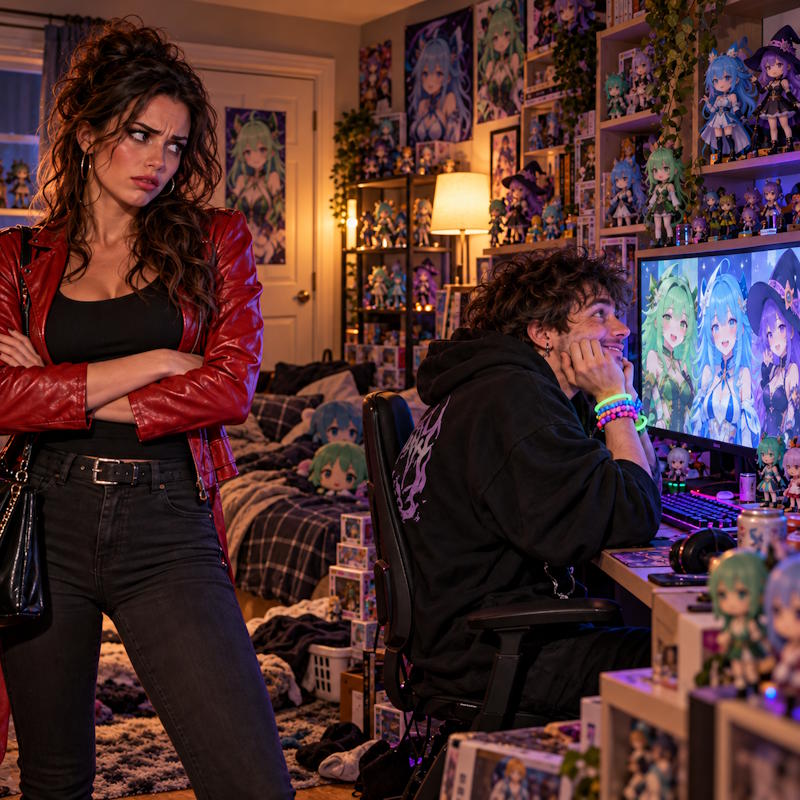
The truth emerged when Cassie opened Étienne’s bedroom door and discovered several body pillows, 900 figurines and a colour-coded database devoted entirely to underaged anime girls with green, blue or purple hair. Étienne subsequently admitted that he was a self-described lolicon and had never been attracted to Cassie. “Real women have pores, opinions and unpredictable lighting,” he says. “A drawing remains perfect from every angle and never asks why you spent the rent money on limited-edition merchandise.”
Cassie was devastated by the revelation. “I make adult entertainment, and the important word there is adult,” she says. “I lost my boyfriend to a collection of fictional children who look like somebody spilled energy drinks on their hair. How am I supposed to compete with a two-dimensional person who never ages, speaks only in catchphrases and doesn’t know what a hydro bill is?”
Relationship expert Dr. Monique Tremblay says romantic disputes involving anime collections are becoming increasingly common in the rave community. “Years of staring at lasers can flatten a person’s perception of depth,” says Dr. Tremblay. “Eventually, some ravers become frightened by anything rendered in three dimensions. We’re opening a treatment centre where patients will gradually be exposed to adult women with ordinary hair colours until they understand that women do not come with display stands.”
Cassie has since ended the relationship, while Étienne changed his online status to “emotionally unavailable except to JPEGs.” He insists that he bears no ill will toward his former girlfriend and hopes they can remain friends, provided she never enters his bedroom during convention season. Étienne told reporters that his heart remains open to love, but only if love has purple hair, no legal personality and can be downloaded in under four megabytes.
A Montreal man allegedly gave his former workmate fake cocaine at a warehouse party as part of an unauthorized intervention intended to make him associate raving with becoming violently ill. “Telling Étienne to stop taking drugs never worked because several doctors, two girlfriends and most of his internal organs had already tried that,” says 32-year-old Patrick Bélanger. “I wanted his body to develop a simple Pavlovian response: hear a kick drum, remember the vomiting and stay home.”
Étienne became suspicious when Patrick approached him beside the speakers despite not having spoken to him since they worked together at a call centre four years earlier. “This was a man who once refused to give me a piece of gum, and now he suddenly had free premium cocaine,” says Étienne. “I knew something was strange, but people don’t go to warehouse parties at four in the morning because they’re making excellent decisions.”
Shortly after accepting the unidentified powder, Étienne became extremely ill and spent nearly two hours vomiting behind a portable toilet while Patrick stood nearby monitoring the intervention. “He kept asking whether I had learned my lesson,” says Étienne. “I told him yes: never accept cocaine from someone who used to supervise my lunch breaks. Apparently that wasn’t the lesson he had in mind.”
Patrick eventually admitted that the substance was not cocaine and that he had given it to Étienne specifically to frighten him away from raves. “The plan was for him to become sick, reconsider his lifestyle and spend Saturday nights doing something healthy,” says Patrick. “Instead, he called the vomiting a spiritual purge and told everyone the party had removed four years of emotional toxins, two childhood traumas and a chicken shawarma.”
Friends assumed the experience and a brief hospital visit for dehydration would keep Étienne home for at least several weeks, but he attended another warehouse party the following night while still pale, nauseated and carrying a plastic bag in case he had to vomit on the dance floor. “He arrived wearing his hospital bracelet and told the bouncer it was an all-access wristband,” says longtime friend Mélanie Gagnon. “At one point he was lying motionless beside a speaker with his eyes closed, but he insisted he was conserving energy and dancing internally.”
Étienne continues to attend parties and says the incident only taught him never to accept mysterious powder from former coworkers. Patrick considers the intervention a complete failure. “I made him sick enough to see through time, destroyed our friendship and spent the next day checking his social media for a retirement announcement, but all he posted was a flyer for the following weekend,” says Patrick. “The only lasting change is that he no longer trusts me. Complete strangers remain completely unaffected.”
Montreal raver Pedro Alvarez has quit the party scene after discovering that DJs have been hiding messages about him inside their music and that several of his closest friends are government agents sent to monitor him. "At first, I only noticed these things after taking drugs," says Pedro. "Then I started noticing them before taking drugs, which proved that the drugs had permanently improved my awareness."
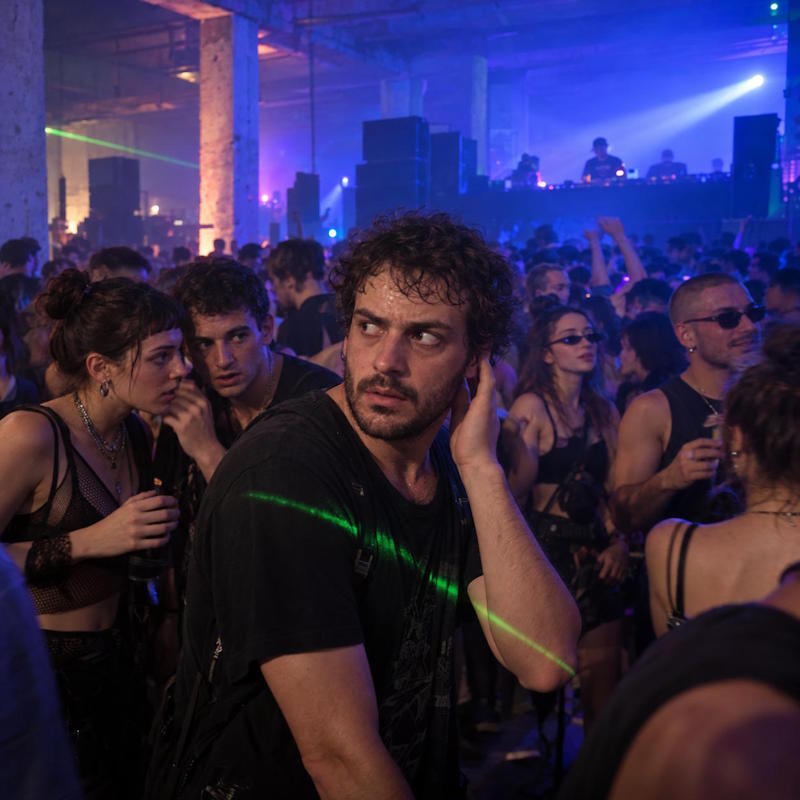
Pedro's suspicions began at a happy hardcore party when he noticed two ravers talking next to him with unusually serious expressions. The music was too loud for Pedro to hear what they were saying, but after one of them glanced in his direction and touched his nose, Pedro became convinced they were discussing an embarrassing incident from six years earlier. "Nobody has a conversation that serious at a happy hardcore party unless it's about me," says Pedro. "Touching your nose is the oldest undercover signal in the book. It means stop talking, Pedro knows."
Things grew worse after Pedro took a large quantity of drugs at a three-day psytrance festival and went nearly sixty hours without sleeping. He became convinced that the music was giving him instructions. One track told him everyone knew who he was, another convinced him that he had offended somebody and a darker track warned that something terrible would happen if he left the dance floor. "By sunrise, it felt like every track was reacting to my thoughts," says Pedro. "I wasn't following the music anymore. The music was following me. Then a green laser pointed directly at my chest. When I pointed at the operator, he aimed it somewhere else. That's how I knew I had caught him."
What began at the festival soon spread to every style of rave music. "Every genre had its own department," says Pedro. "Happy hardcore handled my relationships, jungle distributed intelligence and acid techno conducted the interrogations." Pedro also believed that every nearby conversation was about him. If people laughed, they were mocking him. If they became serious, they were discussing criminal allegations.
Pedro's friends became worried when he accused them of being narcs and undercover government agents who had been sent to befriend him. "He investigated how he met each of us," says his friend Mélanie Dubois. "He said it was suspicious that most of us met him at raves, even though raves are practically the only places he goes. When I reminded him that we'd been friends for twelve years, he said that proved the government was willing to play the long game."
Pedro tested his friends by telling each of them that he intended to buy a different drug, then waiting to see if dealers or DJs appeared to know about it. "I told Mélanie I was looking for ketamine," says Pedro. "Within thirty minutes, two strangers offered me ketamine and the DJ played a track with a voice saying 'fall into the K-hole.' Mélanie says people offering ketamine at a rave is normal. That's exactly the kind of cover story the government would use."
Dr. Leonard Fischkopf of the Montreal Centre for Drug-Induced Revelations says powerful stimulants and psychedelics can cause severe paranoia, particularly when combined with dehydration and several nights without sleep. "Ordinary coincidences begin to feel like evidence and close friends start looking like government informants," says Dr. Fischkopf. "A normal kick drum says boom. It doesn't know your name, it hasn't reviewed your police file and it isn't disappointed in your career. You haven't uncovered a massive conspiracy. The federal government does not have the budget to spend twelve years befriending a man whose biggest secret is where he buys ketamine."
Pedro finally abandoned the rave scene after attending an underground gabber party where he became convinced that hundreds of people were participating in a public trial against him. "The kick drum kept repeating guilty, guilty, guilty," says Pedro. "Then everyone raised their fists at the same time and the DJ looked in my direction. I realized the entire party had already reached a verdict. I'm not going back. Partying was destroying my mind." Since quitting drugs and raves, Pedro has been sleeping normally and no longer hears accusations inside every kick drum. Dr. Fischkopf says anyone experiencing similar symptoms should remain sober, get proper sleep and seek professional help if the paranoia continues. When told that a doctor might establish his baseline, monitor his sleeping patterns and watch for sudden drops in his mood, Pedro became suspicious. "Baseline, patterns and drops?" says Pedro. "That's DJ language. They've infiltrated medicine."
Are drugs making ravers paranoid? Can DJs send secret messages through kick drums? Are Pedro's friends really government agents? Only time, sobriety and several nights of proper sleep will tell.
A 26 year old Montreal raver who sells drugs at underground parties claims six of his female customers are romantically attracted to him. "Everybody knows girls love drug dealers," says Dylan "D-Train" Mercier. "They like danger, confidence and a man who answers his phone at four in the morning. These women are always asking where I am and how quickly I can come over. A normal guy would need an incredible personality to receive that kind of attention."
The women say their conversations with Dylan are strictly commercial. "I text him because I want drugs," says 24 year old bartender Jade Bouchard. "When I write 'Are you coming?' I mean 'Are the drugs coming?' When I write 'I need you right now,' it means I need drugs right now. Last month he added a heart to his reply and charged me twenty dollars less, so I sent one back because I wanted another discount. Apparently that means we're in love."
Dylan believes the urgency of the messages reveals feelings that go far beyond business. "Jade asks 'Are you close?' three or four times before I arrive," he says. "If I take longer than ten minutes, she starts sending question marks and asking where I am. Nobody keeps track of a man that closely unless they're emotionally invested. When I arrive, she pulls me aside and closes the door so we can be alone. That sounds like a secret relationship to me."
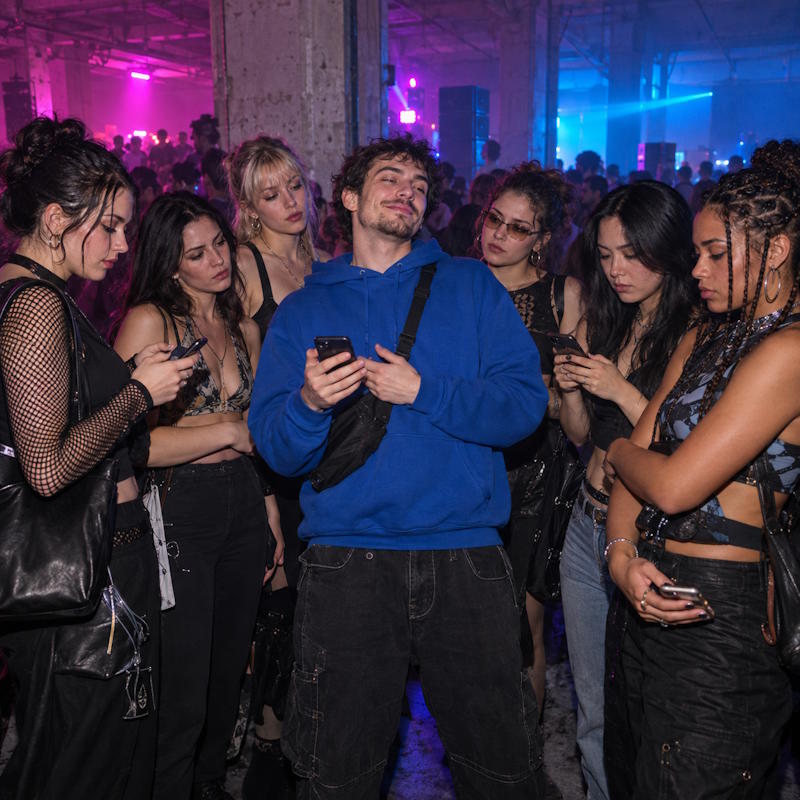
Friends say Dylan has confused excellent customer service with sexual magnetism. "He drives across Montreal at five in the morning, gives attractive women discounts and sometimes pays fifteen dollars to enter a party for a forty dollar delivery," says longtime friend Olivier Beaulieu. "At an afterparty Saturday, he gathered the six women together, called them his girlfriends and announced that Jade was being considered for a management position. One of them didn't even know his real name. She had him saved in her phone as 'Blue Hoodie Drugs.'"
Despite their objections, Dylan is already looking forward to seeing all six women again next weekend. "By Friday night my phone will be exploding and every girl will want to know where I am," he says. "Most men spend years trying to get six women to ask when they can see them. This happens to me every weekend." Jade confirms that the women will probably contact him again. "If he has what we're looking for," she says.
A group of Montreal ravers became convinced that a man they had seen at a party was operating a local sex and drug trafficking ring after taking too much LSD and examining his Facebook profile. Although they saw him once, they never spoke or socialized with him and have never encountered him outside that party. They nevertheless say the large number of photographs showing him at restaurants with different women is extremely suspicious. "Nobody knows that many girls," says amateur investigator and psytrance promoter Cassandra Moonbeam. "Not without having some kind of business arrangement."
The investigation began at an afterparty when one of the ravers recognized the man in photographs posted by a mutual Facebook contact. By then, the group had swallowed several tabs of acid, smoked large amounts of marijuana and abandoned any plans to sleep. "Every time we scrolled down, there was another restaurant and another girl," says Cassandra. "Either he owns the city's most successful escort agency or he's incredibly sociable. Which one sounds more realistic?"
The group spent nine hours cataloguing the women and trying to determine their positions in the alleged operation. While heavily hallucinating, they classified several of the women as "underage strippers" and became convinced they were being moved between nightclubs. "Some of them looked extremely young," says Tyler Bassface, who admits he was on his fourth tab of LSD and that the faces on the screen had begun melting together. "That made identifying them difficult, but it also made the danger obvious."
The ravers believe the type of restaurant identifies which drug is being sold. Parmesan-covered pasta meant cocaine. "Nobody puts that much white powder on food unless they're sending a message," says Cassandra. Sushi meant ketamine. "Japan has cat cafés and catgirls, and vets give cats ketamine," says Tyler. "Connect the dots." The group became even more suspicious when one woman waited an entire week before commenting, "Thanks for dinner, I had a great time." "That isn't a thank-you," says Cassandra. "That's a delivery confirmation."
The man says the photographs are ordinary pictures taken during nights out and denies being involved in any criminal organization. "I have no idea who these ravers are," he says. "They've never spoken to me and now they're warning people that I run a sex and drug ring." Montreal police declined to investigate after learning that the evidence consisted entirely of restaurant photographs interpreted by people experiencing an LSD-induced psychosis. "Eating dinner with women is not a crime," says Sgt. Leonard Baptiste. "Neither is ordering Parmesan."
The following afternoon, several members of the group admitted that the LSD, marijuana and lack of sleep might have affected their investigation. Cassandra refuses to abandon the case. "Everyone keeps blaming the drugs," she says. "But LSD didn't invent those restaurant pictures. It just helped us understand what they mean."