A Montreal man high on crystal meth walked into the first clinic he could find early Saturday morning, hoping someone could help him calm down. Twenty-nine-year-old Kevin Bouchard had reportedly been awake for two days when he spotted a sign reading "clinique" and decided that everyone inside would immediately understand his extremely specific medical situation.
"I told the receptionist my heart was racing, the walls were vibrating and I needed Ativan or some other medically supervised form of going to bed," Kevin says. "She asked if I had an appointment. I said no, but I felt my situation was becoming increasingly walk-in."
Staff tried to explain that the facility specialized in reproductive health and was not equipped to treat someone experiencing a stimulant-related medical emergency. Kevin nodded seriously, filled out half a form and spent several minutes trying to remember the date. "I thought reproductive health meant they were going to reproduce my health," he says. "At the time, that sounded like exactly what I needed."
According to employees, the misunderstanding continued even after Kevin noticed that every poster in the waiting room discussed pregnancy, contraception or abortion care. "I thought it was a general clinic with a very strong reproductive-health section," he says. "A pharmacy can sell condoms and cough syrup. I assumed clinics worked the same way."
It took Kevin approximately ten minutes to realize that he had entered an abortion clinic rather than the kind of medical clinic that could evaluate him. "He finally looked at us and asked, 'Wait, is everybody here for abortions?'" says one employee. "We explained that patients were here for private health-care appointments. Then he whispered, 'I think this might be the wrong clinic,' providing us with the first accurate medical assessment he had made all morning."
Staff contacted emergency medical services and kept Kevin seated until paramedics arrived to assess him. He was reportedly disappointed that nobody at the clinic could simply hand him Ativan, but thanked the employees for their patience. "They were very professional," he says. "I would absolutely go back, although they were quite clear that I should not."
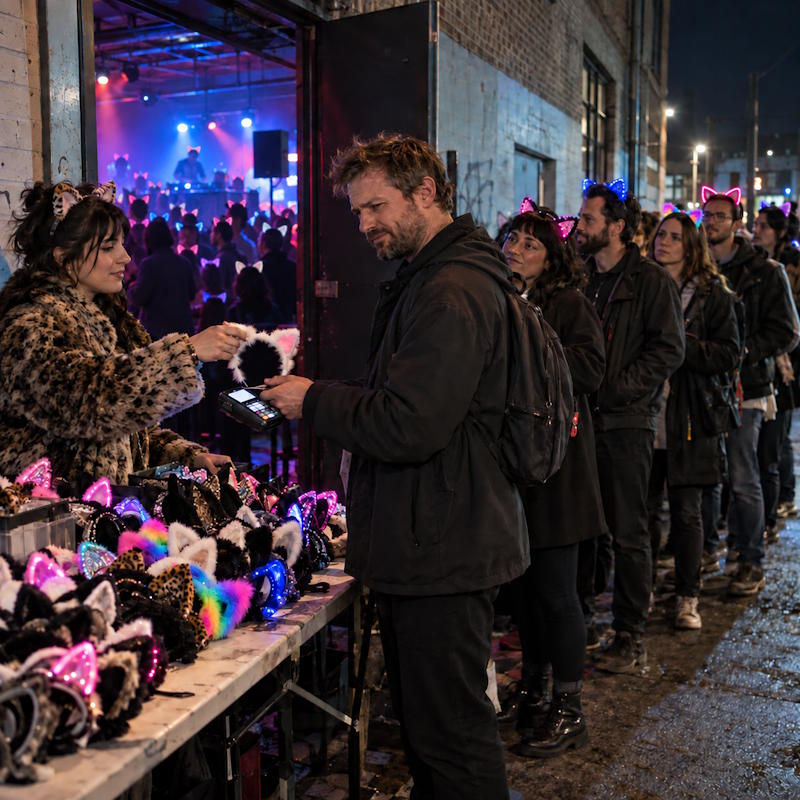
Montreal's nightlife has been conquered by Japanese cat girl raves, a new phenomenon where adult partygoers wear furry cat ears and listen to happy hardcore at speeds normally associated with industrial machinery. "Six months ago, we had forty people meowing in a basement," says promoter Philippe Tremblay. "Now we're filling warehouses with 250 emotionally unstable felines."
The events feature Japanese decorations, mountains of candy and DJs playing cheerful music at more than 180 beats per minute. Guests are encouraged to invent cat names, communicate through exaggerated hand gestures and shout "nya" whenever the music stops. "I attended as Vanessa and left as Princess Whiskerblast," says 27-year-old accountant Vanessa Roy. "I finally understand who I am, and apparently who I am needs glow sticks and fourteen hours of sleep after every rave."
Unlike most Montreal parties, the cat girl raves enforce a strict dress code. Admission normally costs 20$, but anyone arriving without cat ears must pay five times the regular price. "The ears prove that you respect the culture," explains door manager Marc Beaulieu. "If you show up with ordinary human ears, you're not just underdressed. You're insulting Japan, cats and happy hardcore simultaneously. That kind of hatred costs 100$."
The rule has already changed how people prepare for a night out. Convenience stores near several venues have started keeping cheap cat-ear headbands behind the counter, while regular attendees bring spare pairs for friends who forget theirs. "At most themed parties, half the room ignores the theme," says attendee Camille Beaulieu. "Here, everyone puts on the ears because nobody wants to turn a 20$ night into a 100$ night."
Dr. Chantal Minou of the Montreal Institute for Feline Nightlife Studies believes the parties are successful because modern adults secretly want to abandon human society. "People are tired of jobs, rent and meaningful conversation," she says. "Cat girls have no mortgages. They dance, demand attention and knock beverages off tables without apologizing. It is the most honest lifestyle Montreal has produced in decades."
Promoters say several more cat girl events are planned for the winter and insist the dress code will remain even if the novelty begins to fade. They have also installed a stand outside the venue that sells last-minute cat ears for 80$, allowing unprepared guests to save 20$ before reaching the entrance. Philippe denies that the stand is an obvious attempt to profit from forgetful ravers. "We're helping people make the financially responsible decision to spend 80$ on something that normally costs six," he says. "The only people who receive free ears are the DJs because they can't be trusted to remember anything that isn't attached to a USB stick."
A homeless Montreal pickup artist has become a nightlife legend by making women believe they share a unique romantic connection before immediately moving on to someone else. Twenty-eight-year-old Jonathan Renaud has no permanent address, stores his clothing in several promoters' apartments and sleeps on whichever couch remains available after an afterparty. Despite this, his friends claim he possesses enough "big dick energy" to compensate for his lack of housing, employment and emotional stability. "A fixed address is useful for receiving mail," says Jonathan. "It has nothing to do with being the man."
With Montreal now crowded with techno nights, psytrance gatherings, warehouse raves and afterparties, Jonathan says he will never run out of places to play. He describes every meeting as unlike anything he has ever experienced and regularly makes plans he has no intention of keeping. "I don't lie to women," he says. "I temporarily create the version of reality they want to experience. That makes me closer to an artist than a liar." Three women once believed they had arranged dates with him for the same afternoon. A fourth says he invited her to move into an apartment he did not have.
The women eventually met in a bathroom and discovered Jonathan had told each of them that they possessed mysterious eyes, misunderstood personalities and energy he could not explain. "He said he normally hates parties and only stayed because of me," says raver Sophie Beaulieu. "Then I discovered he had nowhere else to go." Sophie admits the experience left her feeling foolish and genuinely sad, although friends expect her to be all over Jonathan again next weekend once her bruised feelings fade. Jonathan believes her return will prove the game was effective. "Nobody comes back to a meaningless interaction," he says. "Heartbreak is basically a five-star review."
Jonathan's friends treat him as a hero and gather around whenever he enters a party to receive reports from the field. His reputation is partly sustained by his repeated claim that he can make a woman orgasm four or more times without difficulty, a statement he delivers whether or not anyone has requested sexual statistics. "Four is the minimum," says Jonathan. "After that, I stop counting because numbers interfere with intimacy." None of his former partners agreed to verify the total, although several confirmed that Jonathan frequently loses count while telling stories about himself.
Jonathan admits that beneath his confidence he has severe self-esteem problems, a fear of being abandoned and what he calls "a complicated relationship with reality." He believes these qualities make him more attractive. "Women can sniff out a damaged man," he says. "Fucked-up people fuck the best because we have something to prove." Relationship counsellor Julie Caron offers a different interpretation. "Emotional instability is not a sexual technique," she says. "Neither is homelessness, dishonesty or repeating the phrase 'big dick energy' until somebody lets you sleep on their couch."
Despite years of complaints, Jonathan remains active at parties across the city and has no intention of retiring. Whenever one scene becomes tired of him, another event opens, another subgenre becomes fashionable and another group of newcomers arrives without knowing his reputation. Jonathan insists his career is not ending, it is becoming more efficient. "Some people want me to be the villain, my friends think I'm the hero and women keep remembering me," he says. "I have no apartment, no savings and several unresolved personal issues, but I'm still playing the game. That makes me the man."
A self-described empath says she is helping heal Montreal's nightlife by turning casual intimacy into a form of emotional care. Twenty-year-old Cassandra "Aura" Leblanc claims she can recognize when someone feels alone, even inside a crowded party. She usually notices the person laughing too loudly, standing quietly near the speakers or spending the entire night making sure everybody else is having fun.
"People think empathy means absorbing someone's sadness and then going home exhausted," Aura explained. "I would rather help them leave with less sadness than they arrived with." Sometimes that means listening, dancing or sitting together until sunrise. Sometimes the connection becomes physical, which Aura openly enjoys and sees as a shared experience rather than a favour she is performing. "Their energy chooses me," she said. "I simply try to be available when it does."
Friends say Aura has connected with DJs, promoters, bartenders, ravers, coat-check workers and one exhausted sound technician whom everyone else ignored. "Most people only speak to me when a monitor stops working," he said. "Aura listened to me explain feedback frequencies for forty minutes and remembered my name the following weekend. I felt desirable for the first time since 2019."
Aura compares her philosophy to the free-love movement of the 1960s. She believes affection does not become less meaningful simply because it is shared with more than one person. She calls herself a "community love distributor," while her friends describe her as Montreal's most personal outreach program. Unlike most wellness services, hers operates after 3 a.m. and occasionally stays for breakfast.
A local wellness practitioner noted that empathy is usually expressed through listening, patience and emotional support. Aura said she offers all three, but believes different people need different kinds of closeness at different moments. "I am not walking into a party with a list," she said. "I pay attention. Sometimes someone needs advice, sometimes they need space and sometimes they need to feel wanted." She does not expect everyone to understand her approach, but believes happiness is not a limited resource.
Aura plans to continue spreading positivity throughout Montreal's many party scenes. "The old hippies gave people flowers," she said, packing incense, massage oil and three phone chargers into an overnight bag. "I give people memorable evenings and a reason to drink electrolytes the next morning. Love is the most powerful force in the universe, and I intend to share it with anyone who needs some."
A 43 year old Montreal raver says he only dates teenage girls because women his own age are too demanding and unwilling to tolerate his lifestyle. "Older women expect you to have a job, furniture and a bedroom that doesn't smell like bong water," says Martin Beaulieu. "Young girls are more open minded. They care about music, having fun and whether I can convince a promoter to let them into a rave."
Martin prefers girls as close as possible to Canada's age of consent, which he repeatedly cites as proof that his relationships are completely normal. "The government picked 16 for a reason," says Martin. "Some of my friends think I should date women in their twenties, but that's disgusting. A 25 year old woman is practically middle aged. She probably has a credit card and strong opinions about men who sleep until four in the afternoon."
Friends say Martin usually dumps his girlfriends once they become old enough to realize that dating him was a terrible mistake. "The trouble starts around 19," says longtime friend Simon Leduc. "They start going to university, meeting normal men and asking Martin why he owns three turntables but no bed frame. That's when he accuses them of changing and starts looking for someone younger."
When Martin becomes bored with his current girlfriend, he spends afternoons hanging around Villa-Maria and trying to meet teenage girls. He insists that standing near a school in a faded rave hoodie and asking young women whether they like happy hardcore is not suspicious. "I'm just meeting people who share my interests," says Martin. "Some men go to bars. I go where the women I'm interested in spend their lunch breaks."
Martin prefers raves to nightclubs because clubs usually require guests to be at least 18 years old. "Clubs are full of old women," he says. "At a rave, nobody cares about age. Promoters just want your money, security can't read most of the IDs and half the people inside look like they escaped from a daycare. It's a much more accepting environment for a mature man with extremely specific romantic preferences."
Martin's current girlfriend will turn 18 next month, forcing him to make a difficult decision about their future. "She's already talking about getting a summer job and applying to university," says Martin. "I can feel her slipping away." Friends believe the relationship might survive another year, but Martin is not optimistic. "I'll always care about her," he says. "I just don't know if I can watch someone I love become elderly."
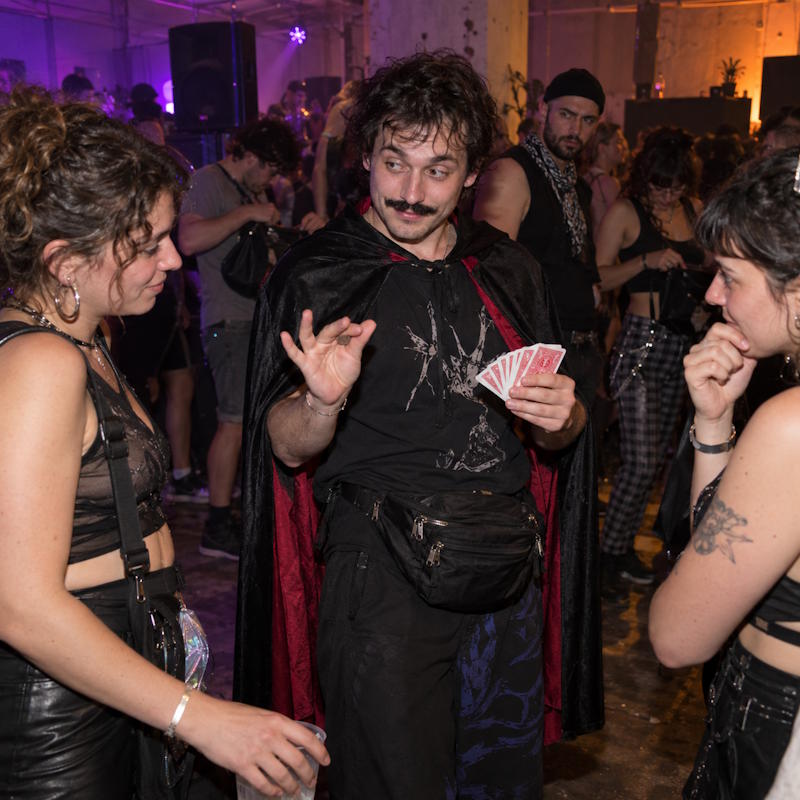
A Montreal raver has avoided paying for drugs for nearly three years by using magic tricks, pickpocketing skills and the generosity of intoxicated strangers. Twenty-nine-year-old Tristan "The Amazing Trizzini" Gagnon attends parties carrying nothing but an empty fanny pack and leaves with what friends describe as a complete pharmaceutical collection. "Other people spend hundreds of dollars partying," says Tristan. "I spend seven dollars on bus fare and let my hands do the shopping."
Tristan's routine begins when he asks someone for a small amount of whatever they are carrying. Witnesses say borrowed containers frequently return lighter, nearly empty or mysteriously different from when they left their owners' hands. "He borrowed my bag for five seconds, waved his fingers over it and gave it back," says raver Amanda Choquette. "Thirty minutes later, I realized everything inside had been replaced with a useless household powder. He didn't even yell 'abracadabra.' That felt unprofessional."
Other victims say personal dispensers, containers and entire collections have vanished after Tristan offered to perform what he calls "close-up rave magic." A former children's birthday magician, Tristan distracts partygoers with card tricks, disappearing coins, plastic wands and brightly coloured handkerchiefs. Nobody remembers seeing him take anything. They only remember him asking confusing questions, bumping into them and complimenting their outfits moments before their possessions disappeared. "He showed me a coin, asked which hand it was in and then both my pockets were empty," says 25-year-old techno enthusiast Simon Roy. "The coin was gone too. Honestly, the trick had too many endings."
Tristan denies being a thief and describes himself as an alternative-economy illusionist. "The drugs don't belong to anyone once the music starts," he says. "They enter a shared spiritual marketplace where ownership is determined by dexterity." He claims his fanny pack is merely a theatrical prop, despite witnesses seeing him empty it after one party and produce fourteen unidentified packets, six dispensers, three wallets, a cigarette case, someone's apartment keys and a small rubber duck he insists belongs to another magician.
Promoters have repeatedly tried to ban Tristan, but he keeps returning in different costumes and under new stage names, including Professor Ketamino, The Great Bumpini and DJ David Coppersniff. "We threw him out on Friday and he came back Saturday wearing a cape and fake moustache," says promoter Patrick Lemieux. "The disguise was terrible, but he performed a card trick for the door person and somehow ended up on the guest list." Harm-reduction workers warn that tampered or substituted substances can cause poisoning and recommend protecting personal belongings, avoiding unidentified substances and notifying event staff about suspected theft.
Tristan remains active in Montreal's party scene and is believed to be performing at warehouses, clubs and afterparties across the city. Every few weeks, another promoter announces that he has been permanently banned, only for him to reappear somewhere else with a new costume and an empty fanny pack. "People keep saying they're going to make me disappear," says Tristan. "Unfortunately for them, I'm the magician."
A former raver has become the most requested woman on the luxury-dating platform Velvet Terms after discovering that years spent navigating afterparties had prepared her perfectly for wealthy men seeking attractive companionship. Twenty-six-year-old Anaïs Desrosiers says her inbox now receives more invitations in one afternoon than most people receive during an entire summer.
Desrosiers spent much of her early twenties in Montreal’s rave scene, where she developed an unusual talent for recognizing who actually had money, who was pretending to have money and who had already borrowed twenty dollars from everyone near the DJ booth. She also became skilled at listening to long personal stories, escaping uncomfortable conversations and remaining polite while somebody explained an investment opportunity nobody had requested.
She joined Velvet Terms after a friend pointed out that she was already spending her weekends entertaining older men at parties without receiving anything beyond warm beer and questionable advice. Desrosiers created a simple profile explaining that she enjoyed good restaurants, honest conversations and people who respected her time. Within two days, she had received hundreds of messages from businessmen, property developers and one man whose profile described him only as “financially discreet.”
Her popularity comes partly from refusing to behave like someone she is not. She does not pretend to understand expensive wine, laugh at every joke or act impressed when a man mentions owning several condominiums. Instead, she asks direct questions, remembers small details and makes her dates feel interesting without treating them like celebrities. “Most of these men have people who want their money,” she explained. “Very few have someone willing to tell them their new haircut was a serious mistake.”
Some former rave friends have criticized the arrangements for being transactional. Desrosiers finds this argument strange coming from people who regularly promote events in exchange for guest-list access. “Almost every relationship involves people wanting something from each other,” she said. “At least Velvet Terms encourages everyone to be honest about what that is.”
Desrosiers now considers each invitation carefully, preferring men who make clear plans and respect her time. She still attends the occasional rave, but says she no longer feels obligated to impress people offering nothing in return. “The rave scene taught me that everybody wants something,” she said. “Velvet Terms taught me to ask what they are bringing to the arrangement.”
Montreal promoters continue to book popular local DJ Max “Genrefluid” Beaumont despite admitting there is only a fifty percent chance he will play the style of music requested. “You can book him for a techno party and get techno, or you can spend the night explaining to angry people why he’s playing happy hardcore,” says promoter Simon Deslauriers. “It’s basically a coin toss, except the coin has a SoundCloud account and arrives forty minutes late.”
Max insists promoters should treat musical genres as suggestions rather than legally binding obligations. “If someone asks me to play house, that tells me they’re emotionally prepared to hear music through speakers,” he says. “What kind of music comes out of those speakers depends on the room, the energy and whatever playlist I opened before leaving my apartment. Sometimes house energy requires drum and bass. Sometimes a psytrance crowd needs two hours of reggaeton. A real DJ gives people what they didn’t know they were trying to avoid.”
Several promoters have stopped putting genres on Max’s flyers because doing so creates unrealistic expectations. Last month, he was booked to close a dark industrial techno event but arrived carrying a USB containing ninety-three disco edits and one Eminem song. “I asked him where the techno was and he told me darkness comes in many forms,” says organizer Patrick Lemieux. “Then he played ABBA while a man in a gas mask stared at me like I had personally betrayed the underground.”
Despite these incidents, Max remains one of the city’s most frequently booked DJs because he brings dozens of friends, former roommates, casual acquaintances and women who believe they are on the guest list. “His music might empty half the dance floor, but his personality fills the entire venue,” says club owner Mélanie Fortin. “When Max is on the flyer, two hundred people show up before midnight. They spend money, take pictures and repeatedly ask when Max is playing. Once he starts playing, many of them leave, but by then we already have their coat-check money.”
Max’s supporters say musical consistency is less important than his ability to transform every booking into a social event centered around himself. “I don’t know what he plays,” says longtime friend Kevin Drouin. “I’ve seen him perform at least thirty times, but I’m usually outside smoking or telling the door person that I’m with the DJ. The important thing is that Max knows everyone. You don’t book him for the music. You book him because every person he has met since high school receives a Facebook invitation.”
Promoters estimate that Max plays the requested genre at approximately half of his bookings, although nobody has successfully predicted which half. He has already been hired for a warehouse party next weekend and instructed to play “whatever he wants” in an attempt to eliminate the problem. Max is furious. “I need direction so I can rebel against it,” he says. “If they genuinely want me to play anything, I have no artistic boundaries to ignore. Honestly, I might cancel.”
A Montreal raver is being accused of operating the dirtiest vehicle in the city after friends discovered that nearly every inch of her 2009 Toyota Yaris is buried beneath hundreds of coffee cups, fast-food containers, rave flyers, cardboard boxes and unidentified garbage. “The car technically has five seats, but only one of them exists above the trash line,” says longtime friend Sophie Gagnon. “The other four are archaeological sites.”
The vehicle belongs to 27-year-old psytrance enthusiast Cassandra Moonbeam, who insists the mess is the natural result of having an active social life. “I’m always driving to parties, festivals and afterparties, so I don’t have time to clean,” she says. “Every cup represents a night I survived. Every cardboard box represents something I ordered online and forgot about. Other people keep photo albums. I keep physical evidence piled up to the windows.”
Friends became concerned when Cassandra offered to drive a visiting DJ to the airport but discovered there was no room for him inside the vehicle. Clearing the passenger seat took forty-five minutes and required three garbage bags, a snow shovel and help from two people who had not agreed to participate. “She kept picking things up and saying, ‘Wait, I need that,’” says DJ Turbo Steve. “At one point she rescued an empty burrito wrapper because she thought there might still be loyalty points on it.”
The cleanup revealed seventeen reusable water bottles, eighty-six disposable cups, four pairs of shoes, a broken camping chair and enough rave flyers to reconstruct Montreal’s underground party history from 2017 onward. Workers also uncovered a sealed plastic container that Cassandra claimed held pasta, although nobody could determine when the pasta had been made or whether it had originally been pasta. “It moved when we put it on the ground,” says Steve. “Cassandra said that proved it was still fresh.”
Local sanitation expert Dr. Bernard Nettoyage believes the car may contain its own functioning ecosystem. “The combination of moisture, decomposing food and several years of trapped body heat has created conditions normally found in tropical wetlands,” he says. “We identified three species of mould, a colony of fruit flies and what may be a new mushroom. From a scientific perspective, the vehicle should either be cleaned immediately or protected as a nature reserve.”
Despite the intervention, Cassandra has already begun rebuilding the pile. She says removing the garbage made the car feel empty and caused loose objects to roll around whenever she turned a corner. “Before, everything was packed so tightly that nothing moved,” she says. “The cups were basically a safety system.” She has promised to keep the passenger seat clear in case someone needs a ride, but friends remain skeptical. Twenty minutes after making the promise, she placed a pizza box on it “temporarily.”
Montreal pornstar Cassie Chrome, 28, believed she had finally found true love after meeting 26-year-old raver Étienne “Bass Goblin” Mercier beside a broken speaker at an illegal warehouse party. “He never stared at my chest, asked about my movies, or tried to impress me,” says Cassie. “I thought I’d found the one decent man in Quebec. It turns out he simply wasn’t interested in three-dimensional women.”
Their romance progressed quickly. Cassie accompanied Étienne to psytrance festivals, tolerated his collection of identical black hoodies and even pretended to understand his three-hour explanation of why DJs who use laptops are destroying Western civilization. “He was distant, but I assumed that was mysterious,” says Cassie. “Whenever I tried to kiss him, he’d close his eyes and whisper Japanese words. I thought he was being romantic.”
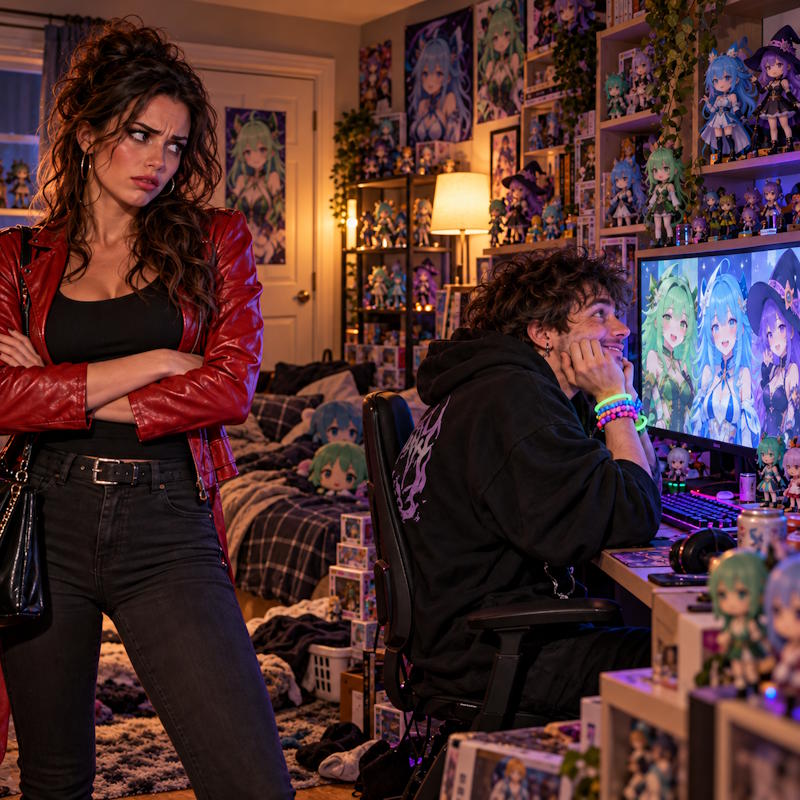
The truth emerged when Cassie opened Étienne’s bedroom door and discovered several body pillows, 900 figurines and a colour-coded database devoted entirely to underaged anime girls with green, blue or purple hair. Étienne subsequently admitted that he was a self-described lolicon and had never been attracted to Cassie. “Real women have pores, opinions and unpredictable lighting,” he says. “A drawing remains perfect from every angle and never asks why you spent the rent money on limited-edition merchandise.”
Cassie was devastated by the revelation. “I make adult entertainment, and the important word there is adult,” she says. “I lost my boyfriend to a collection of fictional children who look like somebody spilled energy drinks on their hair. How am I supposed to compete with a two-dimensional person who never ages, speaks only in catchphrases and doesn’t know what a hydro bill is?”
Relationship expert Dr. Monique Tremblay says romantic disputes involving anime collections are becoming increasingly common in the rave community. “Years of staring at lasers can flatten a person’s perception of depth,” says Dr. Tremblay. “Eventually, some ravers become frightened by anything rendered in three dimensions. We’re opening a treatment centre where patients will gradually be exposed to adult women with ordinary hair colours until they understand that women do not come with display stands.”
Cassie has since ended the relationship, while Étienne changed his online status to “emotionally unavailable except to JPEGs.” He insists that he bears no ill will toward his former girlfriend and hopes they can remain friends, provided she never enters his bedroom during convention season. Étienne told reporters that his heart remains open to love, but only if love has purple hair, no legal personality and can be downloaded in under four megabytes.
A Montreal man allegedly gave his former workmate fake cocaine at a warehouse party as part of an unauthorized intervention intended to make him associate raving with becoming violently ill. “Telling Étienne to stop taking drugs never worked because several doctors, two girlfriends and most of his internal organs had already tried that,” says 32-year-old Patrick Bélanger. “I wanted his body to develop a simple Pavlovian response: hear a kick drum, remember the vomiting and stay home.”
Étienne became suspicious when Patrick approached him beside the speakers despite not having spoken to him since they worked together at a call centre four years earlier. “This was a man who once refused to give me a piece of gum, and now he suddenly had free premium cocaine,” says Étienne. “I knew something was strange, but people don’t go to warehouse parties at four in the morning because they’re making excellent decisions.”
Shortly after accepting the unidentified powder, Étienne became extremely ill and spent nearly two hours vomiting behind a portable toilet while Patrick stood nearby monitoring the intervention. “He kept asking whether I had learned my lesson,” says Étienne. “I told him yes: never accept cocaine from someone who used to supervise my lunch breaks. Apparently that wasn’t the lesson he had in mind.”
Patrick eventually admitted that the substance was not cocaine and that he had given it to Étienne specifically to frighten him away from raves. “The plan was for him to become sick, reconsider his lifestyle and spend Saturday nights doing something healthy,” says Patrick. “Instead, he called the vomiting a spiritual purge and told everyone the party had removed four years of emotional toxins, two childhood traumas and a chicken shawarma.”
Friends assumed the experience and a brief hospital visit for dehydration would keep Étienne home for at least several weeks, but he attended another warehouse party the following night while still pale, nauseated and carrying a plastic bag in case he had to vomit on the dance floor. “He arrived wearing his hospital bracelet and told the bouncer it was an all-access wristband,” says longtime friend Mélanie Gagnon. “At one point he was lying motionless beside a speaker with his eyes closed, but he insisted he was conserving energy and dancing internally.”
Étienne continues to attend parties and says the incident only taught him never to accept mysterious powder from former coworkers. Patrick considers the intervention a complete failure. “I made him sick enough to see through time, destroyed our friendship and spent the next day checking his social media for a retirement announcement, but all he posted was a flyer for the following weekend,” says Patrick. “The only lasting change is that he no longer trusts me. Complete strangers remain completely unaffected.”
Montreal raver Pedro Alvarez has quit the party scene after discovering that DJs have been hiding messages about him inside their music and that several of his closest friends are government agents sent to monitor him. "At first, I only noticed these things after taking drugs," says Pedro. "Then I started noticing them before taking drugs, which proved that the drugs had permanently improved my awareness."
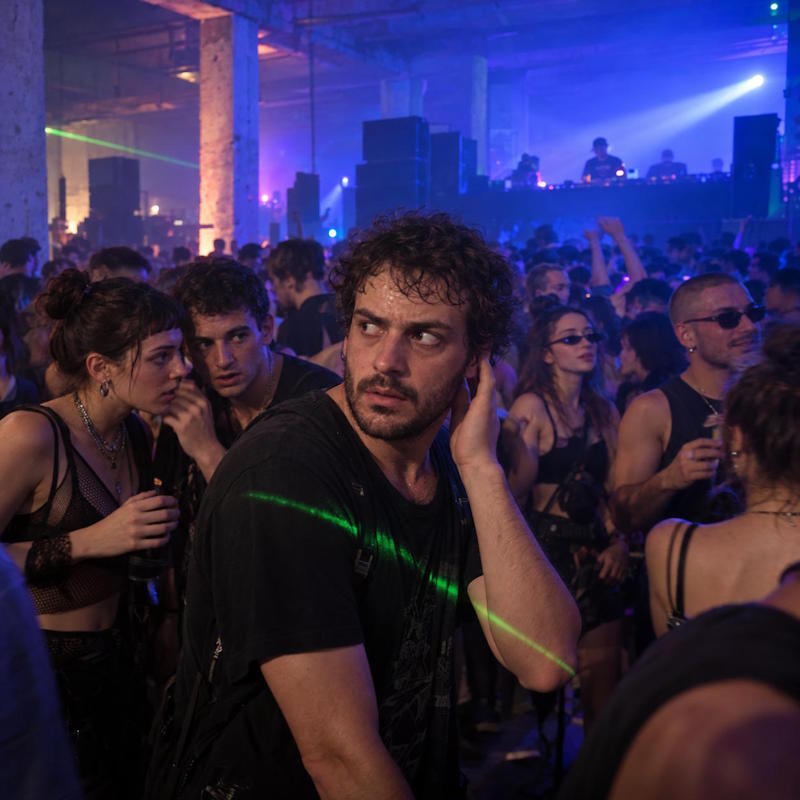
Pedro's suspicions began at a happy hardcore party when he noticed two ravers talking next to him with unusually serious expressions. The music was too loud for Pedro to hear what they were saying, but after one of them glanced in his direction and touched his nose, Pedro became convinced they were discussing an embarrassing incident from six years earlier. "Nobody has a conversation that serious at a happy hardcore party unless it's about me," says Pedro. "Touching your nose is the oldest undercover signal in the book. It means stop talking, Pedro knows."
Things grew worse after Pedro took a large quantity of drugs at a three-day psytrance festival and went nearly sixty hours without sleeping. He became convinced that the music was giving him instructions. One track told him everyone knew who he was, another convinced him that he had offended somebody and a darker track warned that something terrible would happen if he left the dance floor. "By sunrise, it felt like every track was reacting to my thoughts," says Pedro. "I wasn't following the music anymore. The music was following me. Then a green laser pointed directly at my chest. When I pointed at the operator, he aimed it somewhere else. That's how I knew I had caught him."
What began at the festival soon spread to every style of rave music. "Every genre had its own department," says Pedro. "Happy hardcore handled my relationships, jungle distributed intelligence and acid techno conducted the interrogations." Pedro also believed that every nearby conversation was about him. If people laughed, they were mocking him. If they became serious, they were discussing criminal allegations.
Pedro's friends became worried when he accused them of being narcs and undercover government agents who had been sent to befriend him. "He investigated how he met each of us," says his friend Mélanie Dubois. "He said it was suspicious that most of us met him at raves, even though raves are practically the only places he goes. When I reminded him that we'd been friends for twelve years, he said that proved the government was willing to play the long game."
Pedro tested his friends by telling each of them that he intended to buy a different drug, then waiting to see if dealers or DJs appeared to know about it. "I told Mélanie I was looking for ketamine," says Pedro. "Within thirty minutes, two strangers offered me ketamine and the DJ played a track with a voice saying 'fall into the K-hole.' Mélanie says people offering ketamine at a rave is normal. That's exactly the kind of cover story the government would use."
Dr. Leonard Fischkopf of the Montreal Centre for Drug-Induced Revelations says powerful stimulants and psychedelics can cause severe paranoia, particularly when combined with dehydration and several nights without sleep. "Ordinary coincidences begin to feel like evidence and close friends start looking like government informants," says Dr. Fischkopf. "A normal kick drum says boom. It doesn't know your name, it hasn't reviewed your police file and it isn't disappointed in your career. You haven't uncovered a massive conspiracy. The federal government does not have the budget to spend twelve years befriending a man whose biggest secret is where he buys ketamine."
Pedro finally abandoned the rave scene after attending an underground gabber party where he became convinced that hundreds of people were participating in a public trial against him. "The kick drum kept repeating guilty, guilty, guilty," says Pedro. "Then everyone raised their fists at the same time and the DJ looked in my direction. I realized the entire party had already reached a verdict. I'm not going back. Partying was destroying my mind." Since quitting drugs and raves, Pedro has been sleeping normally and no longer hears accusations inside every kick drum. Dr. Fischkopf says anyone experiencing similar symptoms should remain sober, get proper sleep and seek professional help if the paranoia continues. When told that a doctor might establish his baseline, monitor his sleeping patterns and watch for sudden drops in his mood, Pedro became suspicious. "Baseline, patterns and drops?" says Pedro. "That's DJ language. They've infiltrated medicine."
Are drugs making ravers paranoid? Can DJs send secret messages through kick drums? Are Pedro's friends really government agents? Only time, sobriety and several nights of proper sleep will tell.
A 26 year old Montreal raver who sells drugs at underground parties claims six of his female customers are romantically attracted to him. "Everybody knows girls love drug dealers," says Dylan "D-Train" Mercier. "They like danger, confidence and a man who answers his phone at four in the morning. These women are always asking where I am and how quickly I can come over. A normal guy would need an incredible personality to receive that kind of attention."
The women say their conversations with Dylan are strictly commercial. "I text him because I want drugs," says 24 year old bartender Jade Bouchard. "When I write 'Are you coming?' I mean 'Are the drugs coming?' When I write 'I need you right now,' it means I need drugs right now. Last month he added a heart to his reply and charged me twenty dollars less, so I sent one back because I wanted another discount. Apparently that means we're in love."
Dylan believes the urgency of the messages reveals feelings that go far beyond business. "Jade asks 'Are you close?' three or four times before I arrive," he says. "If I take longer than ten minutes, she starts sending question marks and asking where I am. Nobody keeps track of a man that closely unless they're emotionally invested. When I arrive, she pulls me aside and closes the door so we can be alone. That sounds like a secret relationship to me."
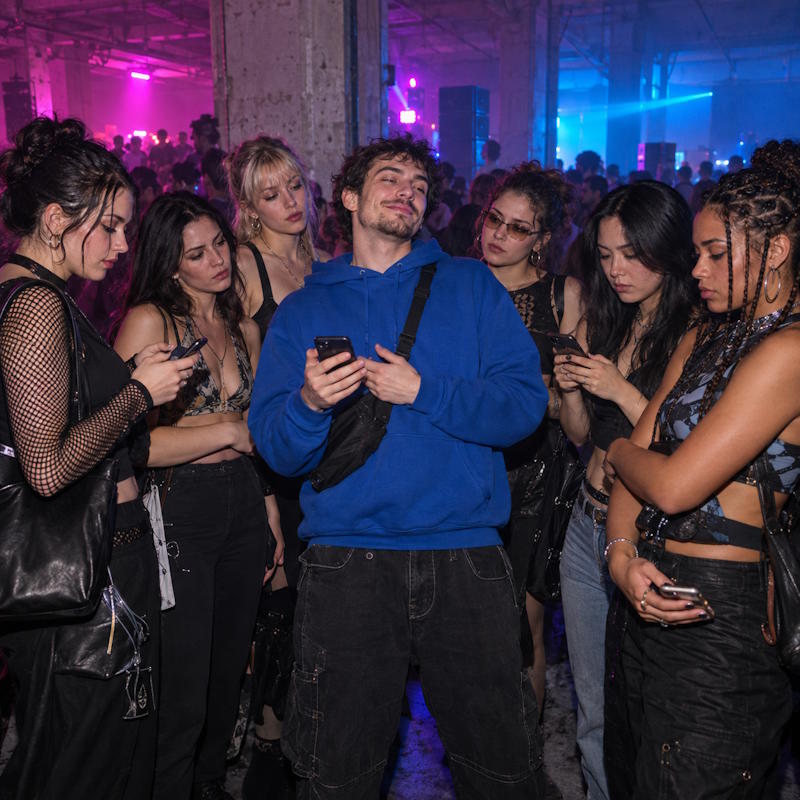
Friends say Dylan has confused excellent customer service with sexual magnetism. "He drives across Montreal at five in the morning, gives attractive women discounts and sometimes pays fifteen dollars to enter a party for a forty dollar delivery," says longtime friend Olivier Beaulieu. "At an afterparty Saturday, he gathered the six women together, called them his girlfriends and announced that Jade was being considered for a management position. One of them didn't even know his real name. She had him saved in her phone as 'Blue Hoodie Drugs.'"
Despite their objections, Dylan is already looking forward to seeing all six women again next weekend. "By Friday night my phone will be exploding and every girl will want to know where I am," he says. "Most men spend years trying to get six women to ask when they can see them. This happens to me every weekend." Jade confirms that the women will probably contact him again. "If he has what we're looking for," she says.
A group of Montreal ravers became convinced that a man they had seen at a party was operating a local sex and drug trafficking ring after taking too much LSD and examining his Facebook profile. Although they saw him once, they never spoke or socialized with him and have never encountered him outside that party. They nevertheless say the large number of photographs showing him at restaurants with different women is extremely suspicious. "Nobody knows that many girls," says amateur investigator and psytrance promoter Cassandra Moonbeam. "Not without having some kind of business arrangement."
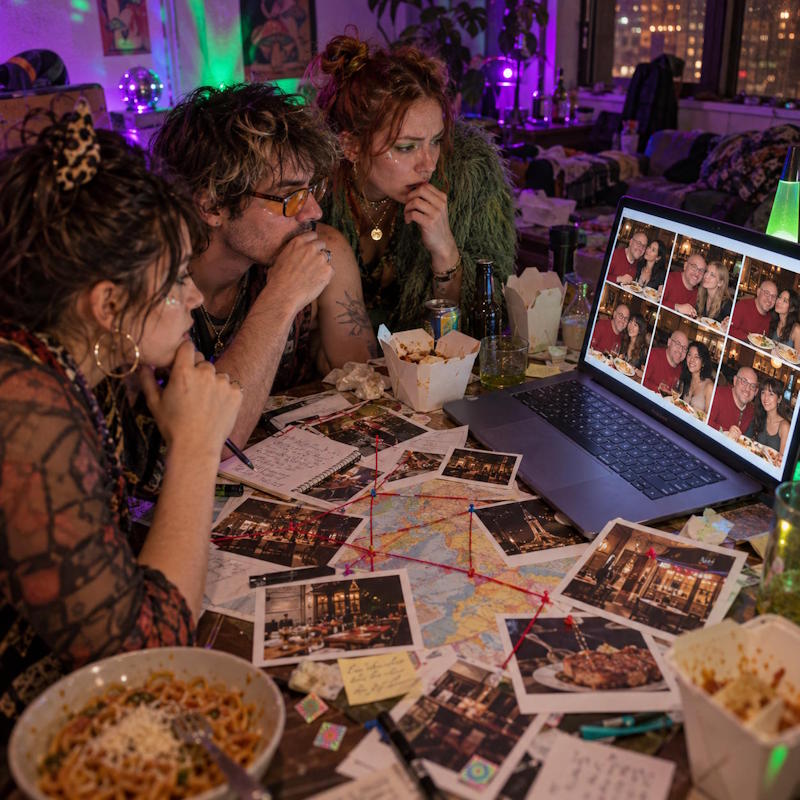
The investigation began at an afterparty when one of the ravers recognized the man in photographs posted by a mutual Facebook contact. By then, the group had swallowed several tabs of acid, smoked large amounts of marijuana and abandoned any plans to sleep. "Every time we scrolled down, there was another restaurant and another girl," says Cassandra. "Either he owns the city's most successful escort agency or he's incredibly sociable. Which one sounds more realistic?"
The group spent nine hours cataloguing the women and trying to determine their positions in the alleged operation. While heavily hallucinating, they classified several of the women as "underage strippers" and became convinced they were being moved between nightclubs. "Some of them looked extremely young," says Tyler Bassface, who admits he was on his fourth tab of LSD and that the faces on the screen had begun melting together. "That made identifying them difficult, but it also made the danger obvious."
The ravers believe the type of restaurant identifies which drug is being sold. Parmesan-covered pasta meant cocaine. "Nobody puts that much white powder on food unless they're sending a message," says Cassandra. Sushi meant ketamine. "Japan has cat cafés and catgirls, and vets give cats ketamine," says Tyler. "Connect the dots." The group became even more suspicious when one woman waited an entire week before commenting, "Thanks for dinner, I had a great time." "That isn't a thank-you," says Cassandra. "That's a delivery confirmation."
The man says the photographs are ordinary pictures taken during nights out and denies being involved in any criminal organization. "I have no idea who these ravers are," he says. "They've never spoken to me and now they're warning people that I run a sex and drug ring." Montreal police declined to investigate after learning that the evidence consisted entirely of restaurant photographs interpreted by people experiencing an LSD-induced psychosis. "Eating dinner with women is not a crime," says Sgt. Leonard Baptiste. "Neither is ordering Parmesan."
The following afternoon, several members of the group admitted that the LSD, marijuana and lack of sleep might have affected their investigation. Cassandra refuses to abandon the case. "Everyone keeps blaming the drugs," she says. "But LSD didn't invent those restaurant pictures. It just helped us understand what they mean."
You can’t walk around San Francisco these days without bumping into someone covered head to toes in dildos. So-called dildo couture is all the rage with the neoliberals of Silicon Valley, who relish in the opportunity to advertise their moral superiority to the rest of the world. There’s nothing quite as morally enlightened as bedecking yourself in a $250,000 bespoke outfit made by the most talented dildo craftsmen in the world.
Victor Biquedor, owner of the famous dildo atelier Le Coq Paillette, says business has been booming. “Nearly every Silicon Valley executive now owns a bespoke dildo suit,” says Victor. “In fact, if you don’t own a tuxedo covered in dildos, you won’t even be allowed into most parties in Silicon Valley. The fact is, only the people who truly appreciate the moral magnificence of dildo couture are accepted by the digerati, which is exactly how it should be.”
Most people in the media share the sentiment. “Silicon Valley is a shining beacon of moral righteousness. The day will come where people won’t worship God, they’ll worship Google,” says culture critic Nobb Von Aochi, who has a degree in Moral Values from Harvard University. “We’ll get out morals from credentialed post-gendered priests who will wear holy garments made of dildos. They’ll teach the common man the virtues of obedience to Silicon Valley. We’re going to exchanges our churches, synagogues, and mosques for Apple stores. We’ll replace our faith with Facebook. And we will get on our knees and give holy blowjobs to our moral betters, the saintly Ivy League graduates who work for tech companies in California. The future is covered in dildos, and working class barbarians better get used to it.”
Working class people across the world agree. In fact, one of the key demands of the Yellow Vest protest movement in France is that they want President Macron to convert France to worshipping Silicon Valley. “All our problems in France would disappear if we just allowed Google to impose its moral values on us,” says protester Nicole Bleu. “Crude genital worship, the valorization of sexual identity above economic issues, the idea that capitalists are morally superior to the working class, the understanding that credentialed trust fund kids with Ivy League degrees are in fact less privileged that blue collar workers and that those workers need to defer to their educated betters on moral issues? That’s the future France needs. It’s the future the entire world needs. We need priests in dildo suits to teach us that we are sinners, and that the only way to be absolved of that sin is to let Google dictate our moral values. Praise be to Silicon Valley, the one true Holy Land. May the morally righteous capitalists of this most holy Valley forgive the working class for our sins. Capital is woke, and the working class must be enlightened.”
Sexologists with the American Institute For Scientific Fisting have released a report that’s sure to dilate your orifices in excitement. According to research conducted by the institute, couples that fist each other are 85% less likely to divorce each other. “There’s a huge causal relationship between fisting and relationship satisfaction,” says lead researcher Dr. Ross Culot. “Most normal relationships see a deterioration in romantic and sexual satisfaction after the first three years together, but couples that fist each other don’t experience that drop. Fisting lovers are like perpetual newlyweds.”
It seems that the act of fisting, which involves shoving your entire hand up your partner’s bodily orifices, creates a kind of psychological and emotional shield around your relationship, rendering it impervious to the stresses that cause normal, non-fisting relationships to shatter. “A couple that fists each other sticks together,” says Dr. Culot. “In fact, mutual fisting is the single most potent act that a couple can take to ensure that it lasts. Nothing else comes close. Not relationship therapy, not a warm and loving rapport between partners, not kindness and compassion, not even regular cocaine fueled gangbangs with your friends and neighbours. Nothing comes close to fisting when it comes to guaranteeing relationship satisfaction.”
Dr. Culot believes that the government should begin teaching high school students the merits and values of fisting. “There’s been a massive collapse in marriage rates over the last sixty years as well as a huge spike in divorce numbers. The American Institute For Scientific Fisting believes that a national fisting strategy could not only halt this decline in marriages, but even reverse it,” says Dr. Culot. “Yes, fisting may seem like a very crude and pornographic act, but it’s a perfectly natural one that can guarantee long term satisfaction in love. Think of all the marriages we could save if everyone learned the value of a good fisting.”
Concerned citizens across Canada are wrestling with the moral implications of a new trend in raving: organized hobo fighting. The last three years has seen an explosion in the popularity of hobo wrestling matches at parties. It’s gotten so bad, that promoters for large events routinely scour their cities looking for homeless people they can recruit for their events.
“At this point, you can’t really call a party a rave if it doesn’t involve hobo wrestling,” says party promoter Denton Hogan. “DJs expect their sets to be accompanied by a hobo wrestling match, and many of them will refuse to play at a party if this isn’t the case. No hobo violence, no music. That’s the new unspoken rule among DJs in Canada. It’s kind of depressing.”
Hobo wrestling matches have become increasingly elaborate since they were introduced, with newer fights taking place in giant iron cages that ravers call Hobo Boxes. Companies have even sprouted up in order to build custom hobo boxes for more demanding promoters “Our most popular hobo box, the Hobonator 3000, features electric bars, rotating chainsaws, and nozzles that squirt out liquid crystal meth at anyone nearby,” says hobo box maker Cliff Kilovich. “It’s a real work of art that’s guaranteed to titilate and excite even the most jaded raver.”
Urban psychologist Dr. Geordie Nickerson says that no one should be surprised by the hobo boxing phenomenon. “Raves reflect the collective id of those who attend them, and now that our society has entered into a period of moral decline, it’s only natural that ravers would begin hiring homeless people to fight each other,” says Dr. Nickerson. “The id of your average raver has deteriorated, become more savage, moral brutal. The little voice in the back of his lizard brain, the one that controls his impulses and instincts, it now craves blood and destruction because your average raver now lives in an environment that is self-destructing. Our society is collapsing, and with it the moral checks that kept our ids in line. Hobo boxing will be with us for as long as the moral center of our civilizations remains loss. Don’t blame the ravers, blame society.”
The public is clamouring for a clamp down on raving after yet another citizen lost their eyes in a feral raver attack, making them the 404th victim this year. “It’s getting out of hand,” says Vancouver police commissioner Ray Riley . “Every week, four or five people have their eyes gauged out by ravers, and no matter how many parties we shut down, no matter how many DJs we throw in jail, the attacks just keep on coming.”
Commissioner Riley has officially asked the federal government to label raving a terrorist hate movement. “This is no longer a police matter,” says Riley. “Ravers are dangerous and pose a serious threat not only to the people of Canada, but to the Canadian state itself. Today they’re gouging out eyeballs, but tomorrow they’ll be gouging out democracy and our right to vote. The only way we can put an end to raver terrorism is by treating ravers as enemy combatants engaged in a holy war against Canada. Ravers are a threat that only the military can fight. They’re just too much for the police to handle.”
Terrorism expert Guro Kuu agrees. “Ravers are the EDM equivalent of the Taliban,” says Mr. Kuu. “The so-called rave scene is really just a hyper militant theocratic community hellbent on replacing Canadian democracy with Plurocracy, the rule of ravers. Say goodbye to liberal democracy and hello to plurology, the religion of peace, love, unity, and respect. When ravers gouge out the eyes of non-believers, they believe they’re doing it for the sake of plur. They’re blood thirsty fanatics who will plunge our country into chaos if they’re not stopped.”
Police officers found Jan Poulet, a twenty year old University student, sobbing uncontrollably in her lederhosen on the corner of St-Catherine and Sherbrooke. The officers knew something was amiss because it’s rare to find lederhosen clad bawling their eyes out on the streets of Montreal. “This isn’t Berlin, so we knew this something unusual was going on” says Sgt. Gaul Ibel. “Our victim was crying rivers of tears, wailing so loudly you could hear her two blocks away. When she finally calmed down, she told us what had happened. She had just escaped from a dungeon full of yodelling slaves.”
The sordid details shocked the officers. Rave promoter Jan Poulet had seduced dozens of men and women into becoming his Oktoberfest playthings. He groomed his victims until they trusted him, and then invited them over to an underground lair he kept beneath St-Catherine street. Once they arrived at his secret hideout, he trapped them in cages and force them to yodel for him.
“Jan Poulet’s lair was hidden in a long abandoned sewer tunnel,” says Sgt. Ibel. “He had discovered it years ago while organizing underground raves. After finding this particular tunnel, he decided that it was better suited for his Oktoberfest themed sex dungeon than it was for raves.”
Poulet was busy furiously masturbating when the police barged into his dungeon, liberating dozens of naked yodellers. “We’re thrilled that we were able to save so many lives from this yodelling obsessed menace, but there are still a lot of questions that need to be answered,” says Sgt. Ibel. “We need to know why Mr. Poulet started his yodel dungeon. Was he acting alone? Is there perhaps a cabal of rave promoters enslaving men and women to turn them into yodel whores? We don’t know yet, and that should worry everyone in Montreal.”
Doctors are asking ravers not to tan their eyes by staring at the sun after dozens of them have gone blind attempting to bronze their eyeballs. Eye tanning is an internet hoax that originated on raving forums where anti-raver trolls have worked hard convincing gullible party kids that they can bronze their eyes by staring directly at the giant ball of fire floating over us.
“The idea is that thirty minutes of eye tanning will turn your eyes a different colour,” says Dr. Hugo Veugle, an ophthalmologist with the Urban Eye Anatomy Institute of Canada. “Obviously staring at the sun doesn’t change the colour of your eyes. It does, however, cause you to go blind. I’d really appreciate it if ravers stopped believing everything they read on the internet. Don’t stare at the sun. Don’t try to tan your eyeballs. Please, just don’t do it.”
Many ravers are unpersuaded by what the medical community has to say. “Tanning eyeballs is a real thing,” says rave promoter Cecile Sealot. “Those so-called eye doctors are in the pockets of the coloured contact lens industry. They want us to spend our hard earned money buying stupid novelty contacts to change our eye colour when we could just spend half an hour staring at the sun for free. It’s a medical conspiracy. Down with coloured contacts, up with staring at the sun! Eye tanning forever!”
It’s not a secret that Generation Z is the most undersexed on record, and a recent study by The Urban Primates Institute confirms it. Researcher Dr. Ron Dawng, has spent the last two years observing the sexual habits of three thousand teenagers. “Our results are conclusive. Teenagers would rather play Minecraft than have sex,” says Dr. Dawng. “They consider fighting off mobs of creepers in Minecraft more rewarding than exploring one another’s sexuality. Generation Z thinks mining ore with a virtual pick-axe is better than taking it up the ass.”
Seventeen year old teenager Todd Solomon agrees. “I’d rather play Minecraft than play with someone’s bodily orifices,” says Todd. “Minecraft is safe, it’s gentle, it’s always there for me when I need it. I love Minecraft and I love what I can do with it. Escaping into Minecraft is way more exciting than escaping into someone’s body cavities. Minecraft is the best lover I could ever ask for.”
Party promoters are worried by the rise of these so-called Minecraft-sexuals. “Dance floors are emptying up as more and more teenagers eschew partying in favour of Minecraft,” says promoter James Jabroni. “Partying is all about finding people to have sex with, so if teenagers don’t want to have sex anymore, they have no reason to party. That’s going to put all us promoters out of business. Imagine a future where all our clubs and bars go out of business because everyone’s too busy building houses in Minecraft to. That future will soon be a reality.”
Helicopter parents are hiring professional ravers to tutor their children in the art of partying. These so-called “rave mentors” are part of a burgeoning industry that aims to alleviate EDM induced parental anxiety. Over 5,000 party mentors have already registered with Ravetutors, a new Silicon Valley company that aims to make raving safe, sane, and consensual for generation Z.
“Middle aged ex-ravers want their children to experience the best of raving while avoiding the many pitfalls associated with it,” says Ravetutors founder Chad Bullsworth. “They don’t want their kids buying fake drugs, or making out with creepy old men, or dancing to happy hardcore. Ravetutors ensures that teenagers that are new to raving will escape bad experiences and only encounter positive, life enhancing EDM adventures. Teenagers in the care of our professional rave tutors will only take the best drugs available at a party, make out with only the hottest ravers in attendance, and they will never dance to happy hardcore. We guarantee it or your money back.”
53 year old architect Rufus Ruphaldo is a huge fan of Ravetutors. “I first signed up with them right before my daughter’s sixteenth birthday,” says Rufus. “The tutors I hired ensured that her first raving experience was problem free. She didn’t get hit on by anyone over 35, the drugs she took were high quality, and she wasn’t exposed to a single happy hardcore DJ set. I couldn’t be happier with the outcome!”
Young ravers are thrilled to receive mentoring, but older party promoters are worried that Ravetutors and services like it will sanitize the party scene. “Raving is supposed to be a little dangerous,” says promoter Hugh Jenutts. “These rave instructors are turning our scene into a University classroom. That’s kind of sad, if you think about it.”
Having a hard time making ends meet? Landlord breathing down your neck? You might want to consider organizing a house rent party. The last decade has seen a revival of this old tradition. Back in the 1920s people who were struggling with rent would open the doors of their apartments to friends and neighbours. In exchange for a small donation, they’d offer music, food, and entertainment from dusk until dawn. Some people believe rent parties were the original raves.
The tradition fell out of favour in the 1960s, but they started making a comeback after the 2008 recession. “At least 20% of Montrealers under 30 have had a house rent party in the last year,” says Urbanologist Ferdinand Flat. “We expect to see those numbers rise as working class pockets continue to be hammered by neoliberal economic policies. In the absence of a real economic recovery, there will be more and more citizens embracing rent parties as a way to survive in a country that doesn’t respect labor.”
Ferdinand believes that within a few short years, over half of Montrealers making under $40,000 a year will have thrown at least one rent party during that time. “We’re getting to the point where practically everyone in Montreal that isn’t a rich asshole will have either attended a rent party or organized one. That says something about the economic climate we now live in.”
The 2019 Methy Awards, the annual raver award ceremony that celebrates the best the EDM scene has to offer, is about to release this year’s slate of nominees. Every January 1st, ravers around the world gather to vote on categories ranging from best promoter, to most innovative new drug, to biggest scene whore. You never know what to expect at the Methy Awards—except that it’ll probably be an event to remember. Or perhaps forget depending on which drugs you’re on.
“I can’t wait to see who wins the most embarrassing DJ award,” says 23 year old raver Abigail Adams. “My vote is for DJ Pandaplex. It was super awkward and kind of disgusting when he gave a handjob to a caged panda on stage. That’s not what the rave scene is about. He’s a total weirdo.”
It’s not all panda handjobs at the Methy Awards. Many of the categories might highlight the silly and absurd elements of the party scene, but the event also celebrates a lot of the unsung heroes of the party community. “Bartenders, bouncers, door men, ticket takers, gaffers, go-go girls, clean-up crew—these are all people who are usually over looked by ravers, and those are the people we want to give awards to,” says Methies founder Chris Kringleton. “One of the reasons I decided to launch these raver awards was to highlight all the incredible work that’s done behind the scenes to make parties possible. Sure, everyone wants to know who is going to win best party of the year, but it’s the myriad awards for raver lackies that are the true heart of the meths.”
You can watch the award ceremony stream live on the internet at 9pm, January 1st 2019.
The city of Toronto is experiencing a urinal cake crisis as hundreds of ravers are scouring public bathrooms in order to steal them. The hygienic products are in hot demand after it was discovered that smoking the crushed remains of a used urinal cake will get you high.
Intrepid psychonauts who have braved the disgust factor in order to smoke crushed urinal pads say that the buzz is like the best parts of cocaine and MDMA mixed with the mild hallucinogenic effects of a low dose of psilocybin. “It’s one of the friendliest highs you can ever have,” says heavy drug user Chad Chatterton. “I’ve taken pretty much everything you can think of in all the weird ways you can imagine. I’ve shoved needles of heroin up my urethra, I’ve huffed gasoline straight from an exhaust pipe, I’ve bathed my ball sack in liquid nitrogen. I’ve done it all, and I’m telling you, nothing comes close in terms of pleasure as smoking the crushed remains of a dirty used urinal cake. Those things are worth their weight in gold.”
The surprising use of dirty urinal cakes as ingredients in a potent psychotropic drug has lead to the creation of a new class of underworld criminals: cake thieves. This class of crook largely consists of ravers who spend their waking hours sneaking into bathrooms looking for their pee soaked goal. A single well drenched urinal cake can sell for up to $25 on the black market, so businesses are having an increasingly hard time keeping their toilets hygienic.
“It’s disgusting that we have to keep an eye on our bathrooms now to make sure people aren’t running away with our urinal cakes,” says fast-food manager Bailey Bebop. “Is that the kind of world we live in now? A world where people make a living stealing urinal cakes?”
Police rescued a woman on Saturday who was being chased down the streets of Montreal by her knife wielding boyfriend. This terrifying incident took place shortly after the woman told her partner that she would rather go to a psytrance party than watch Rick and Morty with him. “Her decision infuriated the man,” says Sgt. Irma Cornichon. “He was desperate for her wubba lubba dub dub, and her refusal to give it to him caused him to suffer a psychotic break with reality.”
The man grabbed a butcher’s knife from the kitchen then chased her out of their apartment and down several city blocks, jumping over garbage cans, dogs, and even small children in pursuit of her. “Thankfully, the woman was able to slow him down by criticizing Rick and Morty. Every time she insulted the show, he paused in his tracks and started crying, which gave her time to put some more distance between her and her attacker.”
Police arrived at the scene of the chase within minutes and quickly put a stop to it. “We had officers nearby who were able to respond to the attack before anything serious happened,” says Sgt. Cornichon. “Unfortunately, we doubt this will be the last time such a scene happens in Montreal. We ask all adult men to remember that cartoons are for children, and that you shouldn’t chase after your girlfriends with butcher knives if they’d rather do something more age appropriate, like drop DMT at a psytrance party, than watch a kid’s show with you,.”
You might not have noticed it, but Bill Gates has quietly become the fashion icon for millions of well behaved party kids. From the streets of Brooklyn to the back alleys of Los Angeles, young adults and older teenagers are rebelling against rebellion by embracing the staid and stoic aesthetic of Seattle’s billionaire nerd king.
Gone are the days of punk rock and hip hop, of drum and bass and booty house—today’s teenagers prefer billcore. This aesthetic movement takes all its cues from the design and fashion choices that Bill Gates has made over his long and storied career. Nerdy and dorky is the new cool. “Modern party kids have a spirit animal, and that animal is named Bill Gates,” says fashion expert Les Tetons. “This generation has turned its back on risk and excitement. They prefer bland, boring, safe, functional, predictable. Today’s teenagers act like yesterday’s grandpas. It’s only natural that they’d embrace Bill Gates as the face of their generation.”
Billcore isn’t limited to clothing choices. The movement is more than what you put on your back. It’s an entire approach to life, a sensibility that permeates every aspect of the modern party kid’s existence. “You’ve got billcore music, billcore interior decor. There’s even a store in Brooklyn that sells mild billcore salsa. Bland is beautiful. Bland is the future.”
Promoter Kyle Kylerson, famous for his ribaldrous raves, has caused his rivals marriage to fall a part after seducing the man’s wife and daughter. “This asshole kept scheduling his parties on the same weekend as mine, so I fucked his wife and his daughter.” says Kyle. “I did them both at the same time. We had a gang bang right on his bed. And I filmed it all. When I was done splooging all over his ladies, I sent him the video. ”
Kyle says his rival wasn’t just a bad promoter, but a bad father who got what was coming to him. “His wife hates him and his daughter doesn’t respect him,” says Kyle. “You think a well adjusted 22 year old woman would have a threesome with her mom? He’s as good a father as he is a promoter, which is to say he sucks.”
It’s not uncommon for rival rave promoters to get revenge on each other through sexual shenanigans says Urbanologist Kesha Sutherland. “Rave promoters engage in all sorts of odd territorial behaviour,” says Kesha. “For example, your average promoter will mark his territory by urinating over it. Some of the more elite rave promoters possess anal glands that secret a musk that warns others not to mess with them. Seducing a mate’s opponent is just one of the many fascinating ways that promoters negotiate territory.”
Doctors across North America are warning people that drinking lean will make them sterile. Lean, also known as purple drank, is popular drug with homeless people and ravers. This intoxicating sludge is made by combing soda with cough syrup. Unfortunately for fans of this devil’s brew, scientists earlier this year revealed that the substance attacks the reproductive organs of both men and women.
Regularly drinking lean causes the hypogonadal axis of the brain, which regulates the production of sexual hormones, to atrophy. “Effectively, when people drink lean, it’s like they’re telling their brain to shrivel up their ovaries and testes,” says Dr. Phil Connors, president of the Mundane Medical Society of Chibougameau. “After a few months of being on lean, a man’s penis begins to rot from the inside out. It takes a few years before it’ll actually fall off altogether, but each time a man takes a swig of lean, it’s like a tiny little misandry gnome is kicking him in the testicles. And you don’t even want to know what happens to female lean drinkers. It’s like nuclear powered menstruation. Just awful stuff.”
Ravers and homeless people are undeterred by these medical warnings. “If the price of getting high on lean is my balls falling off, then that’s a price I’m willing to pay,” says 23 year old party kid Raoul Luoar. “Lean forever!”
PornBob, the world’s largest porn site run by a guy named Bob, has just released it’s annual search engine rankings, and the numbers don’t lie: ravers are addicted to nun pornography. “If there’s one things that gets ravers hot and bothered, it’s the idea of having sex with a nun,” says Bob Bobington, CEO of PornBob. “Nothing comes close to it for ravers. Not gang bangs, not cream pies, not amateur sex, not squirting videos. Nothing.”
For every vanilla porn search a raver makes, they’ll make ten searches for naughty nun doing dirty deeds. Some researchers believe that the reason ravers are so transfixed with nuns is because they’re drowning in degeneracy, desperately craving something wholesome and pure. “All ravers are basically whores who have sex for drugs,” says Ronaldo Corleone, a part-time sambass party promoter and full-time sexologist at the Toronto Institute for Normal Sex. “ In fact, I’m pretty sure every one who has ever been to more than two raves has traded sex for drugs or drugs for sex. It’s just what ravers do. It’s like breathing for them.”
Ronaldo says that ravers who surround themselves with nothing but immorality secretly long for the embrace of someone who is chaste and decent. “Nuns are the polar opposite of ravers,” says Ronaldo. “Ravers are wicked and sinful, while nuns are kind and decent. Ravers have weird cocaine fuelled glowstick orgies, while nuns pray for the unfortunate while worshipping the lord. Ravers believe in nothing but pleasure, while nuns understand that pleasure leads to temptation and temptation leads to eternal damnation in the fires of hell. On some level, ravers understand that they’ve sacrificed their soul for techno, which is why they’re fixated on having sex with nuns.”